Maudsley Model of Anorexia Nervosa Treatment for Adults (MANTRA)
MANTRA (Maudsley Model of Anorexia Nervosa Treatment for Adults) is an evidence-based therapy designed specifically for adults with anorexia nervosa. It focuses on understanding the deeper emotional, cognitive, and relational factors that keep the eating disorder going, while building motivation and supporting meaningful, lasting change. Treatment is collaborative and individualized, often guided by a workbook that helps clients develop insight, self-compassion, and a stronger sense of identity beyond the eating disorder.
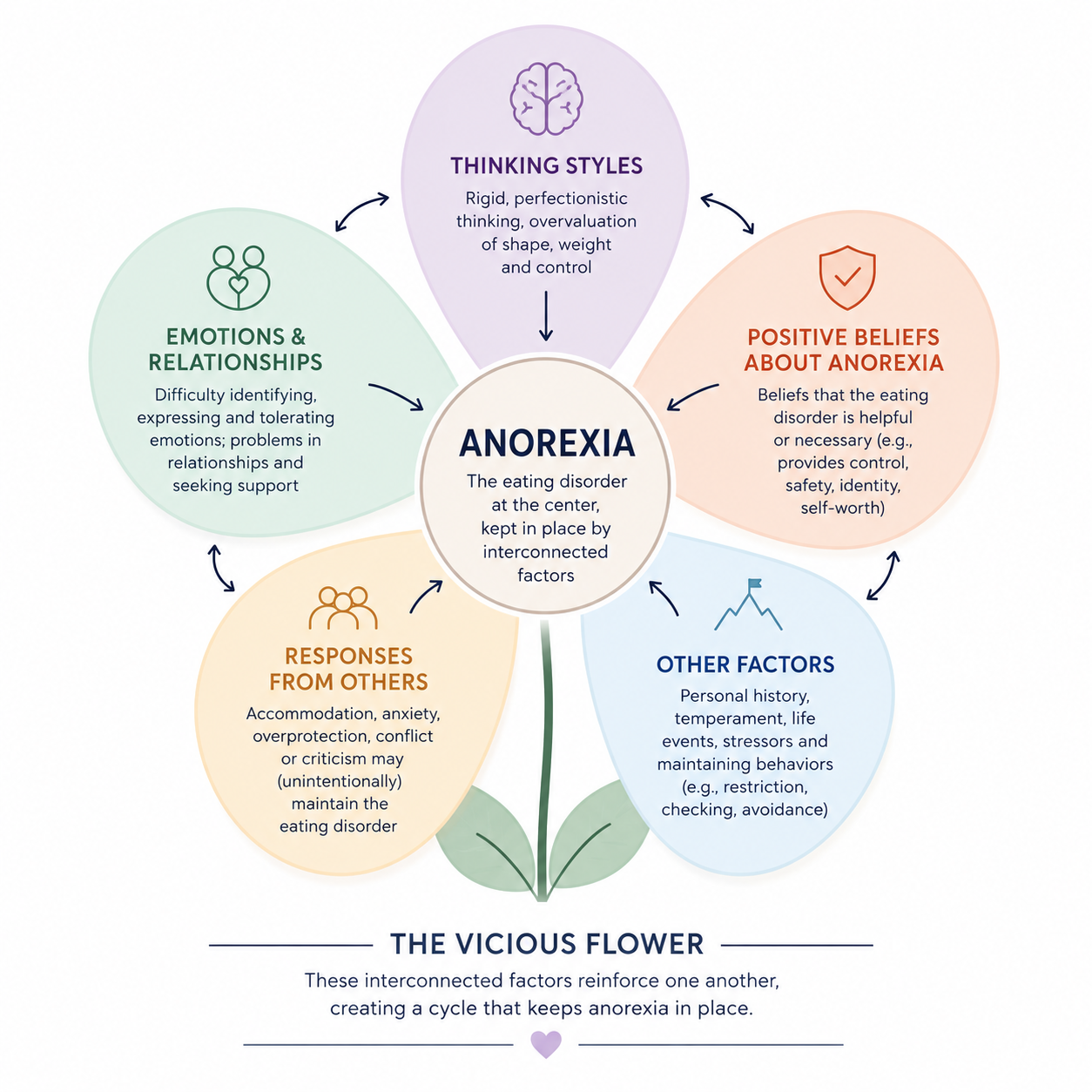
A central tool in MANTRA is the “vicious flower” formulation, which maps out the key factors (or “petals”) maintaining anorexia. These often include:
Rigid or perfectionistic thinking styles
Difficulties with emotions and relationships
Positive beliefs about anorexia (e.g., safety, control, identity)
Unhelpful responses from others that may unintentionally reinforce symptoms
By identifying these patterns, therapy helps clients gently “untangle” the cycles that keep them stuck and develop more flexible thinking, healthier coping strategies, and supportive connections. Treatment typically lasts 20–40 sessions and ends with relapse prevention planning to support ongoing recovery.
-
MANTRA may be right for you if you're an adult with anorexia nervosa or atypical anorexia and are looking for a collaborative, compassionate approach to recovery. It can be particularly helpful if you feel stuck in unhelpful patterns such as perfectionism, rigid thinking, emotional avoidance, or low confidence, or if you're feeling ambivalent about change.
At recoverED Clinic, we'll work with you to understand your individual needs, preferences and goals before recommending a treatment approach. If MANTRA isn't the best fit, we also offer other evidence-based therapies, including CBT-E and SSCM, so together we can find an approach that best supports your recovery.
-
Yes. MANTRA was specifically designed to support people who feel unsure, conflicted or ambivalent about recovery. Rather than expecting you to be fully motivated from the start, MANTRA recognises that mixed feelings about change are a normal part of living with anorexia nervosa.
Together, we'll explore what the eating disorder does for you, what it may be costing you, and what recovery could make possible. Therapy moves at a collaborative pace, helping you build motivation, confidence and hope while working towards meaningful, lasting change.
-
Yes. MANTRA is an evidence-based treatment for adults with anorexia nervosa and is recommended in several international clinical guidelines. Research shows it can help improve eating disorder symptoms, support weight restoration where appropriate, and reduce the psychological factors that maintain anorexia, such as perfectionism, rigid thinking and difficulties with emotions and relationships.
MANTRA is designed to be collaborative and individualised, making it particularly helpful for people who value understanding why the eating disorder has developed and what continues to keep it going. At recoverED Clinic, we tailor MANTRA to your unique experiences, strengths and recovery goals, recognising that there is no one-size-fits-all approach to recovery.
-
MANTRA typically involves 20–40 sessions, depending on your individual needs, recovery goals and the severity of your eating disorder. Some people benefit from a shorter course of therapy, while others may require longer-term support, particularly if the eating disorder has been present for many years.
Throughout treatment, we'll regularly review your progress together and adapt therapy as needed. Recovery isn't about rushing the process, it's about building meaningful, sustainable change that supports long-term wellbeing.
-
MANTRA is a collaborative, formulation-based therapy that helps you understand the factors maintaining your eating disorder and develop new ways of responding to them. Together, we'll explore areas such as thinking styles, emotional regulation, relationships, identity, and the role the eating disorder plays in your life, while supporting nutritional recovery and physical health.
Using the MANTRA workbook and guided discussions, therapy helps you build insight, strengthen motivation for change, and develop practical strategies that support lasting recovery. Treatment is tailored to your individual experiences, values and goals, recognising that everyone's recovery journey is unique.
-
Yes. MANTRA's collaborative and individualised approach makes it well suited to being adapted for neurodivergent individuals, including autistic, ADHD and AuDHD people. Therapy can be tailored to your communication style, sensory experiences, executive functioning, cognitive preferences and emotional processing, while recognising the important role these factors may play in your relationship with food and recovery.
At recoverED Clinic, we take a neuroaffirming approach that respects neurodivergence as a difference rather than a deficit. Together, we'll adapt MANTRA to support your nervous system, build on your strengths, and develop recovery strategies that are practical, meaningful and sustainable for you.
-
Neither MANTRA nor SSCM is universally "better." Both are evidence-based treatments for adults with anorexia nervosa, and research suggests they can be effective. The best choice depends on your individual needs, preferences and recovery goals.
MANTRA is a more structured, formulation-based therapy that focuses on understanding the psychological and interpersonal factors maintaining anorexia, such as perfectionism, rigid thinking, emotional regulation and relationships. SSCM is a more flexible, supportive approach that combines nutritional guidance with psychotherapy, placing greater emphasis on the therapeutic relationship and collaboratively addressing the issues most important to you.
At recoverED Clinic, we'll work with you to understand your unique presentation before recommending a treatment approach. If one therapy isn't the right fit, your treatment can be adapted or changed over time to ensure it continues to support your recovery.