
Cognitive Behaviour Therapy for ARFID (CBT-AR)
-
Your first CBT-AR session is about getting to know you and understanding your unique experience with eating. We'll explore your eating history, the foods you currently feel comfortable eating, any fears or sensory sensitivities, and how eating is affecting your health, daily life and wellbeing.
Together, we'll develop a shared understanding of what is maintaining your eating difficulties and discuss your goals for therapy. We'll also explain how CBT-AR works, answer any questions you have, and create a treatment plan that feels collaborative, supportive and tailored to your individual needs.
-
Both CBT-AR (Cognitive Behavioural Therapy for ARFID) and CBT-E (Enhanced Cognitive Behavioural Therapy) are evidence-based treatments for eating disorders, but they are designed for different concerns.
CBT-AR was developed specifically for Avoidant/Restrictive Food Intake Disorder (ARFID). It focuses on increasing food variety, reducing anxiety around eating, and addressing the specific factors driving food avoidance, such as sensory sensitivities, fear of choking or vomiting, or a lack of interest in eating.
CBT-E is designed to treat eating disorders where concerns about weight, shape or body image play a central role, such as anorexia nervosa, bulimia nervosa, binge eating disorder and OSFED. It helps people establish regular eating patterns, challenge unhelpful beliefs about food and body image, and reduce eating disorder behaviours.
At recoverED Clinic, we carefully assess your individual needs before recommending a treatment approach. Some people clearly fit one model, while others may benefit from elements of both, particularly if ARFID occurs alongside body image concerns or another eating disorder. Treatment is always tailored to your unique presentation and recovery goals.
-
Yes. CBT-AR can help people whose eating is limited by sensory sensitivities to the taste, texture, smell, temperature or appearance of food. Rather than trying to eliminate sensory differences, therapy focuses on understanding how they affect eating and gradually increasing flexibility in a way that feels safe and manageable.
At recoverED Clinic, we take a neuroaffirming approach, recognising that sensory sensitivities are a genuine part of many people's experience, particularly for autistic and ADHD individuals. Together, we'll work collaboratively to build a broader range of acceptable foods while respecting your sensory needs, reducing distress around eating, and supporting your nutritional and wellbeing goals.
-
Yes. One of the main goals of CBT-AR is to gradually expand the range of foods you feel comfortable eating. Whether your eating is limited by sensory sensitivities, fear of negative consequences (such as choking or vomiting), or a low interest in food, therapy uses collaborative, step-by-step strategies to help you try new foods at a pace that feels manageable.
The aim isn't to force you to eat everything, but to increase flexibility, improve nutrition, reduce distress around eating, and make meals easier to navigate in everyday life. Progress looks different for everyone, and treatment is always tailored to your goals, preferences and individual needs.
-
If eating causes anxiety or panic, you're not alone. Many people with ARFID experience intense fear related to choking, vomiting, allergic reactions, sensory overwhelm or the physical sensations of eating. These fears are very real and can make meals feel distressing.
CBT-AR helps you understand what is driving the anxiety and gradually build confidence through collaborative, manageable steps. Therapy is paced to your needs and aims to reduce fear over time without forcing you into situations before you feel ready. The goal is to help eating feel safer, less overwhelming and more flexible while respecting your individual experiences and needs.
CBT-AR (Cognitive Behavioral Therapy for Avoidant/Restrictive Food Intake Disorder) is a structured, time-limited treatment that helps individuals expand the variety and/or volume of foods they eat while reducing anxiety and avoidance around eating. Treatment begins with psychoeducation, establishing regular eating patterns, and gradually increasing preferred foods, alongside developing an individualized understanding of what maintains the eating difficulty (e.g., sensory sensitivity, fear of negative consequences, or low interest in food). A collaborative treatment plan then guides which foods and goals to target next.
The core of CBT-AR focuses on gently and systematically addressing these maintaining factors through exposure-based strategies:
Sensory sensitivity: gradual, repeated exploration of new foods (sight, smell, taste, texture)
Fear of aversive consequences: building confidence through step-by-step exposure to feared foods or situations
Low interest in eating: increasing awareness of hunger/fullness and practising eating even when interest is low
Treatment typically lasts 20–30 sessions, depending on individual needs, and ends with relapse prevention planning to support continued progress and confidence with eating.
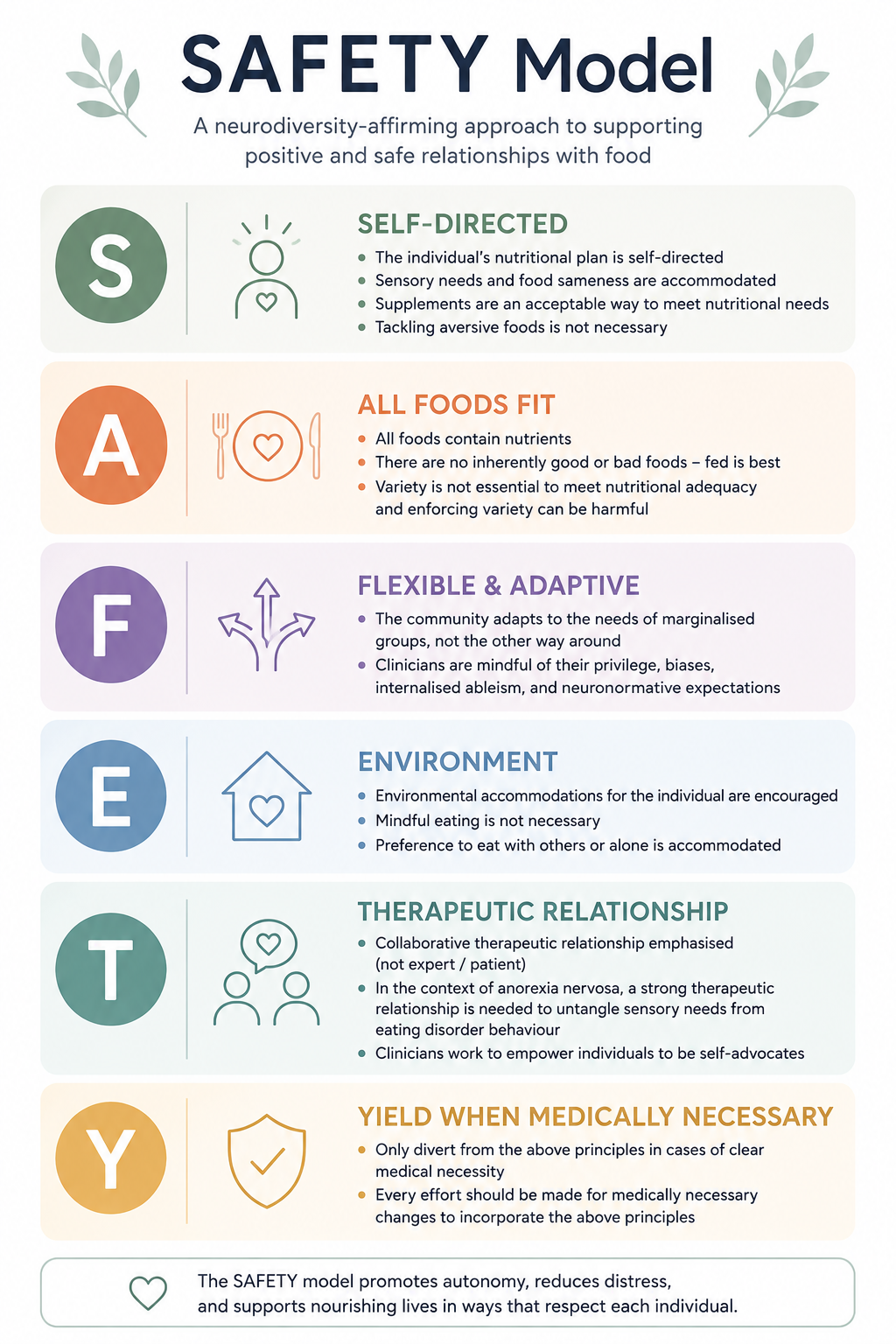
We understand that ARFID is common among neurodivergent individuals. In these cases, treatment is adapted using a neuroaffirming approach, incorporating the SAFETY model developed by Lucy Smith.