
What is EMDR?
Eye Movement Desensitisation and Reprocessing

Eye Movement Desensitisation and Reprocessing (EMDR) is a structured, evidence-based psychotherapy designed to help people process and recover from distressing life experiences, particularly trauma. Unlike traditional talk therapies, EMDR does not require you to go into extensive detail about painful memories. Instead, it uses guided bilateral stimulation (such as eye movements, tapping, or sounds) to help the brain reprocess and integrate these experiences in a more adaptive or helpful way.

EMDR is widely recognised as an effective treatment for trauma. You can learn more about EMDR from EMDR Association of Australia (EMDRA).
How Does EMDR Work?
EMDR is based on the understanding that distressing or traumatic experiences can become “stuck” in the brain in an unprocessed form. These memories may continue to trigger strong emotional, physical, and psychological responses long after the event has passed. This is what contributes to re-experiencing symptoms that ar
e common in individuals who suffer from PTSD. EMDR supports the brain’s natural healing processes through several key mechanisms:
1. Adaptive Information Processing
EMDR is grounded in the Adaptive Information Processing (AIP) model, which suggests that the brain has an innate capacity to process and integrate experiences. When trauma overwhelms this system, memories can become fragmented. EMDR helps “unstick” these memories so they can be reprocessed and resolved.
A foundational overview of this model is described in Francine Shapiro’s work (Shapiro and Maxfield, 2002), with further discussion available in peer-reviewed literature.
2. Bilateral Stimulation
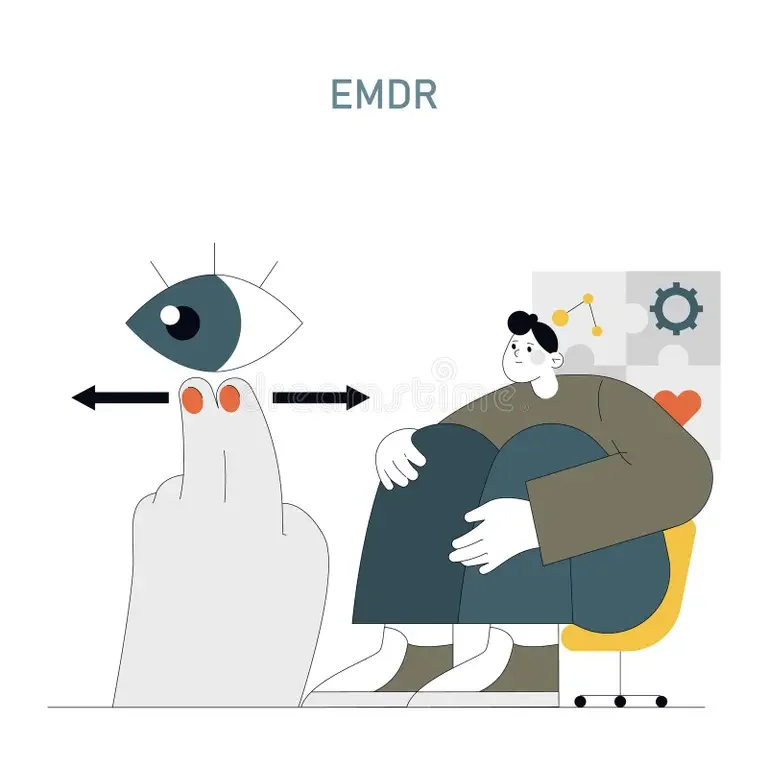
During EMDR, the therapist guides you through bilateral stimulation (e.g., eye movements or tapping) to engage both hemispheres of the brain simultaneously. This process helps calm the nervous system, reduce the emotional intensity of traumatic memories, and facilitate communication between the emotional and logical brain centres. Research suggests this may:
Reduce the emotional distess of traumatic memories
Encourages bodily and emotional integration
Making distressing images less vivid
Reduction of trauma symptoms
Enhance positive cognitive changes
Read more on the science behind Bilateral stimulation.
3. Memory Reconsolidation
EMDR activates distressing memories in a controlled, safe environment while introducing new, adaptive information. This allows the memory to be reconsolidated, meaning it is updated with a reduced emotional charge and a more balanced perspective.
4. Reduced Physiological Arousal
EMDR helps regulate the nervous system by decreasing the fight–flight–freeze response associated with trauma. Over time, triggers that once caused distress become more manageable or neutral.

What happens in an EMDR session?
EMDR therapy follows a structured 8-phase protocol, as outlined by EMDR International Association.
These phases include:
History taking and treatment planning
Preparation and resourcing (building coping skills and distress tolerance)
Processing distressing memories (Bilateral stimulation)
Installation of more adaptive beliefs
Body-based integration
Sessions are collaborative, paced to your inidividual needs, and focused on helping you feel safe and in control through out the entire process.
Who can EMDR help?
EMDR is best known for treating trauma, but research shows it can be effective for a wide range of psychological difficulties.
Trauma and PTSD
Post-Traumatic Stress Disorder (PTSD)
Complex trauma and attachment trauma (cPTSD)
Abuse (emotional, physical, sexual)
Medical or birth trauma
Accident or injury-related trauma
EMDR is recommended as a first-line treatment for PTSD in international guidelines.
EMDR has also been shown to be effective for the treatment of:
Anxiety and Stress
Generalised anxiety
Panic attacks
Social anxiety
Phobias
Grief and loss
Attachment difficulties and relational trauma
Performance anxiety (e.g., work, study, sport)
Distressing memories that continue to impact daily life
Addictions
Eating disorders

Is EMDR the right fit for you?
EMDR may be a good fit if:
You’ve experienced trauma or distressing life events
You notice recurring patterns linked to past experiences
You want a therapy approach that goes beyond talking alone
You are looking for an evidence-based trauma therapy in Melbourne
You are able to tolerate distressing or uncomfortable emotions
A thorough assessment will be done to ensure EMDR is used safely and appropriately, often alongside other approaches such as trauma-informed CBT, or Schema Therapy, depending on your needs.
Always discuss any concerns you have with your therapist prior to treatment. If anything comes up during treatment, our psychologists are trained to support you in ensuring you feel safe and in control of your treatment.
An individualised treatment plan is made collaboratively with you to ensure you feel comfortable proceeding with any treatment that your psychologist recommends.
You can read more about EMDR on EMDR International Assosciation (EMDRIA).

Get In Touch
If you're interested in working with us, complete the form with a few details about yourself. One of our psychologists will review your form and get back to you within 2-3 business days.